 yaort
yaort
Related Articles

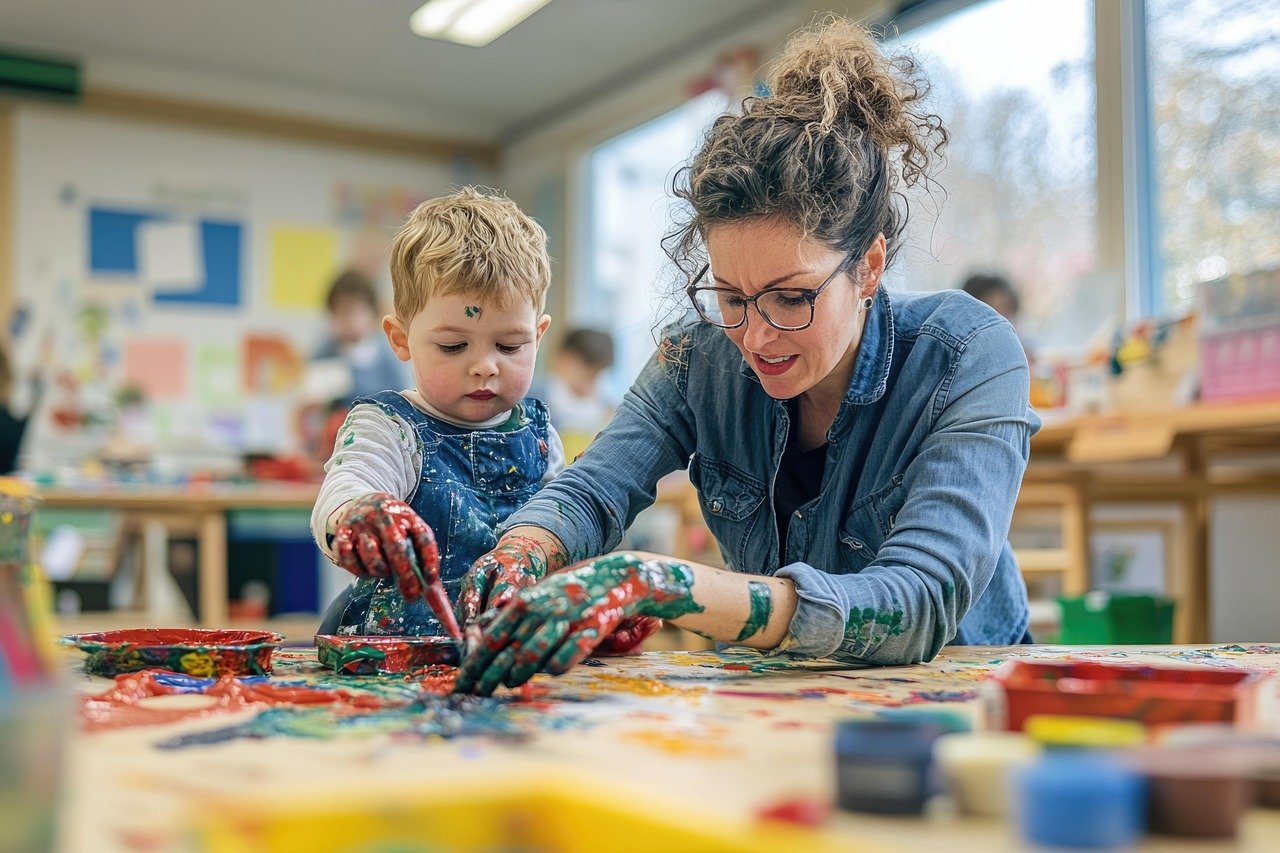
Creative play is one of the simplest and most natural ways children learn about the world around them. When children build, draw, pretend, experiment, arrange objects, or create their own games, they are doing much more than having fun. They are learning how to think, make decisions, handle challenges, and find solutions when something does not go as planned.
Problem solving is an important skill that children use throughout childhood and later in adult life. It helps them understand situations, consider different choices, overcome difficulties, and make thoughtful decisions. While adults can teach problem solving through direct instructions, children often develop these skills more naturally through play.
Creative play gives children freedom to explore ideas without always needing a correct answer. A child building a tower may discover that it keeps falling. Instead of simply giving up, the child may try using larger blocks at the bottom. Another child making a pretend shop may need to decide how to organize the items or how to handle a customer who wants something that is not available.
These small experiences help children practice important thinking skills in a safe and enjoyable environment.
What Is Creative Play?
Creative play is any type of play that allows children to use imagination, experiment with ideas, and create something in their own way. It does not always require expensive toys or special equipment.
Children can enjoy creative play with building blocks, paper, crayons, boxes, dolls, household objects, puzzles, clay, water, or natural materials. Pretend games are also a valuable form of creative play.
For example, a child might turn a cardboard box into a house, use cushions to create a small tent, or pretend to run a restaurant with family members. The child decides what the objects represent and how the activity should continue.
This freedom is important because creative play does not always have one fixed outcome. Children can make mistakes, change their plans, and try again.
Why Problem Solving Skills Matter for Children
Problem solving helps children deal with everyday challenges. It allows them to think before acting and understand that there can be several ways to approach a problem.
A child with developing problem solving skills may be better able to answer questions such as:
What should I do if my toy breaks?
How can I build this tower so it stays up?
What can I do if my friend wants to play a different game?
How can I complete this drawing if I do not have the color I wanted?
What should I change if my plan does not work?
These situations may appear small to adults, but they are meaningful learning opportunities for children.
Strong problem solving skills can also support independence. When children learn that they can think through a difficult situation and find a possible solution, they may become more confident when facing new challenges.
Creative Play Encourages Children to Think Independently
One of the main benefits of creative play is that it gives children opportunities to make their own decisions.
During structured activities, children are often told exactly what to do. Creative play is different. A child may decide what to build, what materials to use, and how the final creation should look.
For example, if a child is given several blocks, there is no single correct structure that must be created. The child can build a house, bridge, tower, road, or something completely different.
This freedom encourages independent thinking.
Children begin to understand that they can make choices and see the results of those choices. If one decision does not work, they can make another choice.
This is an important foundation for problem solving because children learn to become active participants rather than simply waiting for adults to provide answers.
Building and Construction Activities Improve Problem Solving
Building activities are especially useful for developing problem solving skills. Blocks, magnetic tiles, cardboard pieces, recycled containers, and other building materials allow children to experiment with balance, size, shape, and structure.
Imagine a child trying to build a tall tower. The tower falls several times. Instead of seeing the failed attempts as wasted effort, the child can learn from them.
The child may notice that the larger blocks provide better support. They may decide to create a wider base. They may also discover that placing too many pieces on one side makes the tower unstable.
Through this simple activity, the child is learning about cause and effect.
Parents do not need to explain every detail. Sometimes it is better to allow children to observe what happened and think about what they could change.
Questions such as “What do you think made it fall?” or “What could you try next?” can encourage deeper thinking.
Pretend Play Develops Flexible Thinking
Pretend play is another powerful form of creative play. Children can become doctors, teachers, shopkeepers, chefs, builders, pilots, or characters from their imagination.
During pretend play, children create situations and then respond to them.
For example, a child playing doctor may decide that a toy animal is sick. The child then needs to think about what the animal needs. Perhaps it needs medicine, rest, food, or a bandage.
The child is creating a problem and solving it within the imaginary situation.
Pretend play also helps children understand different perspectives. When children pretend to be another person, they have opportunities to think about what that person might say, feel, or do.
This type of flexible thinking can become useful when children face real social and everyday problems.
Art Activities Encourage Creative Solutions
Drawing, painting, cutting, coloring, and working with clay can also support problem solving.
Suppose a child is drawing a house but realizes there is not enough space for a tree. The child might change the size of the house, move the tree, or create a smaller tree.
There is no need for the child to follow one fixed solution.
Art encourages children to think creatively when something does not happen as expected. A color may look different from what they imagined. A piece of paper may tear. A shape may not look right.
Instead of stopping, children can learn to adjust their ideas.
This teaches an important lesson: a problem does not always mean that an activity has failed. Sometimes a problem simply means that a new approach is needed.
Creative Play Teaches Children to Learn From Mistakes
Mistakes are a normal part of learning. Creative play gives children a safe place to experience them.
A child may build something that falls apart or create a game that does not work as expected. When adults allow children to experiment, they can learn that mistakes are opportunities to try something different.
Parents can support this process by avoiding immediate criticism.
Instead of saying, “You did it wrong,” an adult can ask, “What could you change?”
This small change in language can make a significant difference.
Children begin to understand that making a mistake does not mean they are unable to solve a problem. It simply means that their first idea did not work.
This mindset can help children become more persistent.
Creative Play Builds Patience and Persistence
Some problems cannot be solved immediately. Children may need several attempts before they find an answer.
Creative play gives them opportunities to practice persistence without making the experience feel like formal learning.
A child trying to complete a difficult puzzle may first place the wrong pieces together. A child making a structure may rebuild it several times. A child creating a paper craft may need to change the design.
Each attempt provides new information.
Over time, children can learn to stay with a task for longer periods. They may also become more comfortable with challenges.
Persistence is closely connected to problem solving because finding a solution often requires more than one attempt.
Games Can Help Children Practice Decision Making
Simple games can also encourage problem solving. Board games, matching games, building challenges, and homemade games can require children to make choices.
For example, a child may need to decide which piece to move first or how to arrange objects to complete a challenge.
Parents can make these activities more useful by giving children time to think.
It can be tempting to provide the answer quickly, especially when a child seems stuck. However, allowing a little extra time can encourage the child to consider different possibilities.
The goal is not always to solve the problem quickly. The goal is to help children learn how to think through the problem.
Creative Play Improves Decision Making
Problem solving and decision making are closely connected.
When children play creatively, they constantly make small decisions. They decide which material to use, where to place an object, what character to become, and what should happen next.
These choices may seem simple, but they provide regular practice.
As children gain experience, they can begin to compare different options.
For example, a child may realize that using a large box will make a stronger structure than using a small box. Another child may decide that drawing a picture with fewer details will make it easier to complete.
These experiences teach children to consider options instead of making every decision immediately.
Creative Play Supports Social Problem Solving
Creative play is not always an individual activity. When children play together, they also need to solve social problems.
Two children may want the same toy. They may disagree about the rules of a game. One child may want to build a house while another wants to build a shop.
These situations create opportunities to practice communication and cooperation.
Children can learn to explain what they want, listen to another person’s idea, negotiate, and find a solution that works for everyone.
Adults can support this process without taking over every disagreement.
Simple questions such as “What could you both do?” or “Can you think of a solution together?” can encourage children to work through the problem.
How Parents Can Encourage Creative Problem Solving
Parents do not need complicated activities to support creative play. Everyday materials can be enough.
Keep a small box of safe creative materials such as paper, crayons, cardboard, blocks, plastic containers, and washable craft supplies.
Give children time to play without controlling every part of the activity.
Parents can also introduce small challenges.
For example, ask a child to build a bridge that can hold a toy car. Ask them to create a house using boxes. Ask them to make a boat from safe household materials and see whether it floats.
The important part is not whether the child succeeds immediately. The important part is allowing the child to experiment.
Ask Questions Instead of Giving Immediate Answers
One of the best ways adults can support problem solving is by asking helpful questions.
If a child says, “I cannot do this,” instead of immediately solving the problem, try asking:
“What have you tried so far?”
“What could you change?”
“Is there another way?”
“What do you think will happen if you try this?”
“Which idea do you want to try first?”
These questions encourage children to think independently.
Of course, there are times when children genuinely need help. The goal is not to leave a child frustrated. The goal is to provide enough support while still giving the child an opportunity to think.
Avoid Making Every Activity Perfect
Children do not need perfect results from creative play.
A drawing does not need to look realistic. A building does not need to stand perfectly. A pretend game does not need to follow adult rules.
When adults focus too much on the final result, children may become afraid of making mistakes.
Creative play works best when children feel comfortable experimenting.
Parents can praise effort, ideas, patience, and persistence instead of focusing only on whether something looks good.
For example, saying “I like how you tried a different way” can be more helpful than simply saying “That looks great.”
Simple Creative Play Ideas for Problem Solving
There are many easy activities parents can try at home.
Build a Tall Tower
Give children blocks or safe household objects and ask them to build the tallest stable tower they can.
Create a Cardboard City
Use boxes and paper to make houses, roads, shops, and other buildings. Let children decide how everything should be arranged.
Make a Toy Boat
Give children safe materials and ask them to create something that can float in a container of water.
Create a Pretend Restaurant
Children can design a menu, organize pretend food, take orders, and solve imaginary customer problems.
Design a New Game
Ask children to invent their own game and explain the rules. If the rules do not work, encourage them to change them.
Build a Bridge
Use blocks, cardboard, or paper to create a bridge that can support a small toy.
Each of these activities gives children opportunities to plan, test, adjust, and try again.
The Role of Parents in Creative Play
Parents do not need to become teachers during every play session. Sometimes the most helpful thing they can do is observe.
Watch what the child is trying to accomplish. Notice where the child becomes confused or frustrated. Offer encouragement when needed.
It is also useful for parents to show curiosity.
Instead of judging the child’s creation, ask about it. “Tell me about what you made” gives the child an opportunity to explain their thinking.
This can also help parents understand how their child approaches problems.
Some children immediately experiment. Others spend time planning. Some children prefer to ask questions. Each child may have a different approach.
Why Creative Play Should Be Part of Everyday Childhood
Children spend many hours learning through everyday experiences. Creative play gives them a natural way to practice thinking skills without making every lesson feel formal.
The value of creative play goes beyond entertainment. It can support imagination, independence, communication, decision making, persistence, and problem solving.
Children need opportunities to make choices and experience the results of those choices. They also need safe opportunities to make mistakes and try again.
Creative play provides all of these experiences.
Conclusion
Creative play supports children’s problem solving skills by giving them opportunities to explore, experiment, make decisions, and find solutions. Building activities can teach children about balance and cause and effect. Pretend play can encourage flexible thinking. Art can help children adjust their plans when things do not go as expected. Games can improve decision making, while group activities can support social problem solving.
Parents can encourage this development by giving children time, space, and simple materials for creative activities. Instead of solving every problem for them, adults can ask thoughtful questions and allow children to explore possible answers.
The most important thing is to remember that children do not need complicated toys or expensive activities to develop problem solving skills. A box, some blocks, paper, crayons, or a few household objects can provide valuable learning opportunities.
When children are allowed to create, make mistakes, change their plans, and try again, they gradually learn an important lesson. Problems are not always something to fear. They can be challenges that invite us to think, experiment, and discover a better way.
Creative play therefore deserves an important place in childhood. Through simple and enjoyable experiences, children can develop problem solving skills that can support them at home, at school, in relationships, and in many situations throughout life.