 yaort
yaort
Related Articles


Learning is a natural part of childhood. Children are curious, observant, and often eager to understand the world around them. However, as they grow older, learning can sometimes begin to feel like a responsibility rather than an enjoyable experience. Homework, tests, difficult subjects, mistakes, and comparisons with other children can make some kids lose confidence or develop a negative attitude toward school and studying.
Parents play an important role in shaping how children think about learning. A child who learns that mistakes are normal, questions are welcome, and effort matters can become more confident and willing to explore new ideas. A positive attitude toward learning does not mean that a child will always enjoy homework or find every subject easy. Instead, it means developing curiosity, patience, confidence, and a willingness to keep trying.
The good news is that parents do not need complicated strategies to encourage this attitude. Small changes in everyday conversations, routines, and reactions can make a meaningful difference.
Make Learning Feel Interesting
One of the easiest ways to encourage a positive attitude toward learning is to connect education with things children already enjoy. Learning does not have to happen only through textbooks or classroom assignments.
For example, a child who enjoys cooking can learn about measurements, fractions, temperature, and basic science in the kitchen. A child who likes animals can explore books about wildlife or learn about different habitats. Children who enjoy building things can practice mathematics, design, and problem solving through simple projects.
When children understand that learning exists beyond school, education can become more meaningful. They begin to see knowledge as something useful and interesting rather than simply something they need to memorize for a test.
Parents can ask questions such as, “Why do you think that happened?” or “What would happen if we tried this?” These simple questions encourage children to think instead of simply looking for correct answers.
Praise Effort Instead of Only Results
Children often believe that being successful means getting everything right. If parents focus mainly on grades and correct answers, children may become afraid of making mistakes.
Instead, parents can recognize effort, persistence, preparation, and improvement.
For example, instead of saying, “You are so smart,” a parent might say, “You worked really hard to understand that problem.”
This difference may seem small, but it teaches children that ability can develop through practice.
A child who receives encouragement for effort is more likely to continue trying when something becomes difficult. They learn that struggling with a subject does not automatically mean they are bad at it.
Parents should still celebrate achievements, but it is helpful to focus attention on the process that produced those achievements.
Teach Children That Mistakes Are Part of Learning
Mistakes can be powerful learning opportunities. Unfortunately, some children begin to fear mistakes because they believe errors mean they are not intelligent or capable.
Parents can change this mindset by responding calmly when children make mistakes.
If a child gets an answer wrong, instead of immediately saying, “That is incorrect,” try asking, “Let us look at it together. Where do you think things went differently?”
This encourages the child to examine the problem without feeling embarrassed.
Parents can also share appropriate examples of their own mistakes. Children benefit from hearing that adults also make errors and sometimes need several attempts before understanding something.
The goal is not to make children careless about their work. Rather, it is to help them understand that mistakes can provide useful information.
Encourage Children to Ask Questions
Questions are one of the strongest signs of active learning. Children who feel comfortable asking questions are more likely to explore ideas deeply.
Parents should avoid making children feel embarrassed for asking something that seems obvious. What appears simple to an adult may be completely new to a child.
When a child asks a question, parents can respond with patience. If they do not know the answer, they can say, “I am not sure. Let us find out together.”
This teaches children that not knowing something is not a problem. Learning begins when we recognize what we do not yet understand.
Parents can also encourage children to ask questions about everyday situations. During a walk, a shopping trip, or a family activity, curiosity can become part of normal conversation.
Give Children Some Control Over Their Learning
Children are more likely to feel interested in learning when they have some control over how they learn.
Parents can offer reasonable choices without removing structure. For example, a child might choose whether to read before or after completing another assignment. They might choose between drawing a diagram, writing notes, or explaining an idea aloud.
These choices help children develop independence.
Giving children control does not mean allowing them to avoid responsibilities. Parents can still establish clear expectations while giving children opportunities to make decisions within those boundaries.
Over time, this can help children become more responsible for their own learning.
Create a Comfortable Learning Environment
The environment around a child can influence concentration and motivation. A learning space does not need to be large or expensive. A quiet corner with basic supplies may be enough.
Try to keep commonly used school materials organized and easily accessible. Reduce unnecessary distractions during study time and make sure the child has enough light to read comfortably.
A positive learning environment should also feel emotionally safe. Children should know that they can ask for help without being criticized.
If a child associates studying with constant pressure, arguments, or fear, learning may become emotionally difficult. A calm environment can make educational activities feel more manageable.
Avoid Comparing Children With Others
Every child develops at a different pace. Comparing one child with a sibling, classmate, or friend can damage confidence and motivation.
Statements such as “Your brother is much better at mathematics” may make a child believe that intelligence is something they either have or do not have.
Instead, compare the child with their own previous performance.
You might say, “You understood this much faster than you did last month.”
This helps children notice their own progress.
Healthy competition can sometimes motivate children, but constant comparison can create unnecessary pressure. The goal should be to help children improve rather than convince them that they must outperform everyone else.
Help Children Discover Their Interests
Not every child enjoys the same subjects. Some children love reading, while others prefer science experiments, drawing, sports, technology, music, or practical activities.
Parents should pay attention to these interests and use them as opportunities for learning.
A child interested in cars might enjoy learning about physics and engineering. A child interested in stories might develop stronger reading and writing skills. A child who loves gardening can learn about plants, weather, soil, and environmental science.
Following a child’s interests does not mean ignoring difficult subjects. Instead, interests can provide a bridge that makes learning feel more personal.
When children discover that education can connect with things they genuinely care about, their motivation can become stronger.
Teach Children How to Handle Difficult Subjects
Every child will eventually encounter a subject that feels difficult. The way parents respond during these moments can shape the child’s attitude toward challenges.
Avoid immediately taking over and completing the work for them. Instead, break the problem into smaller steps.
For example, if a child is struggling with a complicated mathematics question, ask them what part they understand. Then work through the next step together.
This approach gives children the experience of solving problems rather than simply receiving solutions.
Parents can also remind children that difficulty does not mean failure. Sometimes understanding takes repeated practice.
A phrase such as “You do not understand it yet, but we can work through it” can encourage persistence.
Build a Consistent Learning Routine
Children often benefit from predictable routines. A regular study schedule can reduce arguments and help children know what to expect.
The routine does not need to be extremely strict. The important thing is consistency.
For example, children might complete schoolwork after a short period of rest and then have time for play or family activities.
Breaks are also important. Young children may struggle to concentrate for long periods without interruption. Short breaks can help refresh attention.
A balanced routine should include learning, physical activity, relaxation, sleep, and family time. Children need more than academic work to develop successfully.

Read Together Regularly
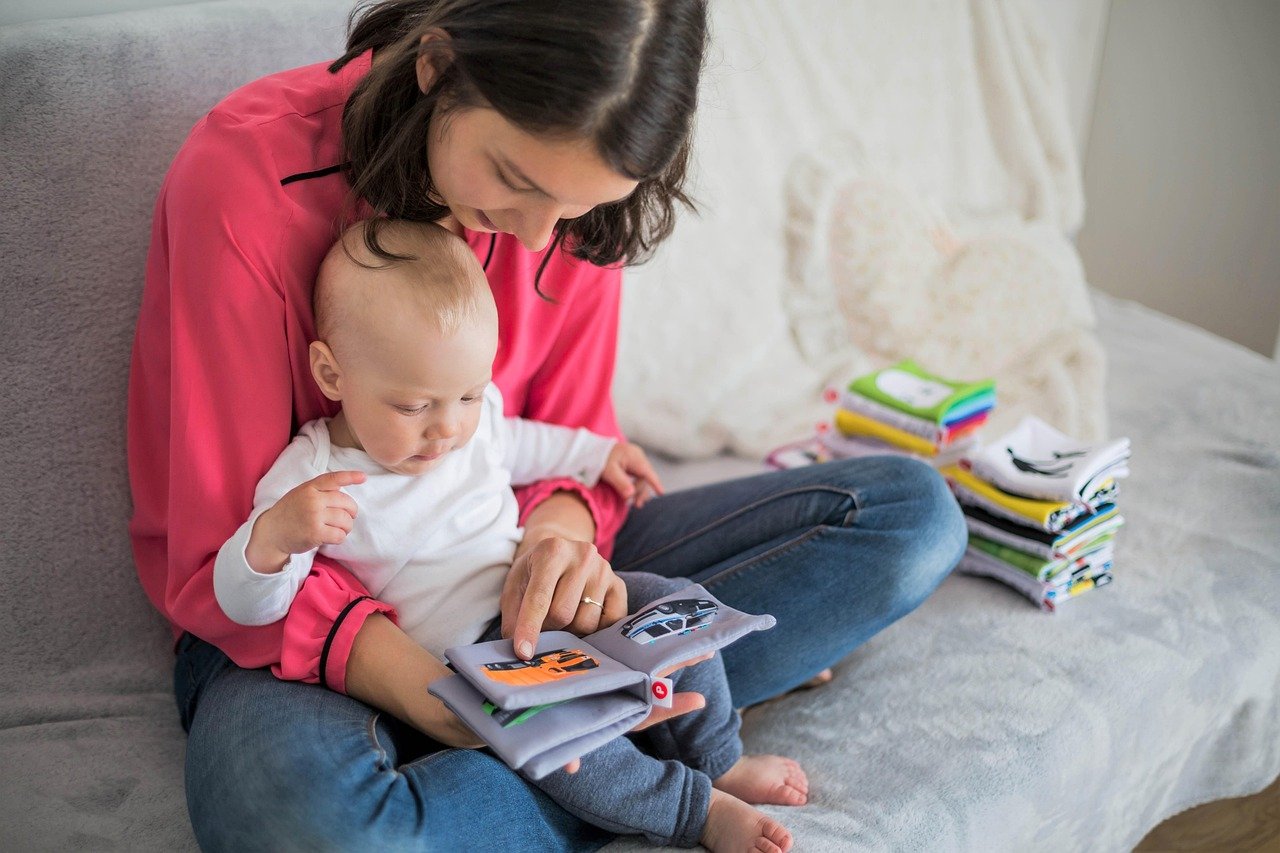
Reading is one of the simplest ways to build a positive relationship with learning.
Parents can read with children even when the child is old enough to read independently. Discussing stories, characters, ideas, and unfamiliar words can make reading interactive.
Let children choose some of the books they want to read. Fiction, nonfiction, magazines, biographies, science books, and age appropriate educational materials can all provide valuable experiences.
Reading together can also become a relaxing family activity rather than another school requirement.
When children associate books with curiosity, imagination, and enjoyable conversations, they may become more willing to read independently.
Celebrate Progress
Children need to recognize that progress matters.
A child who once struggled to read a paragraph may eventually read a whole book. A child who found multiplication confusing may eventually solve problems confidently.
Parents should notice these changes.
Celebrating progress does not always require gifts or rewards. A simple statement such as “I can see how much you have improved” can be meaningful.
Keeping a record of achievements can also help children see their development. For example, parents can save drawings, writing samples, projects, or completed books.
Looking back at older work can show children that their abilities can change with time and practice.
Avoid Making Every Learning Activity About Grades
Grades can provide useful information, but they should not become the only measure of learning.
If every conversation about education begins with marks, children may start believing that the purpose of learning is simply to achieve a particular score.
Parents can ask broader questions.
Instead of only asking, “What grade did you get?” try asking, “What did you learn today?” or “What was the most interesting thing you studied?”
These questions shift attention toward knowledge and understanding.
A child can perform well academically while still developing a negative attitude toward learning. Likewise, a child with average grades may be developing curiosity, persistence, and independence. Parents should look at the bigger picture.
Model a Positive Attitude Toward Learning
Children learn by watching adults.
If parents regularly complain that learning is boring or that they dislike trying new things, children may absorb those attitudes.
Parents can demonstrate curiosity in everyday life.
Read about something you do not understand. Try learning a new skill. Ask questions. Admit when you do not know something. Talk about discoveries that interest you.
When children see adults enjoying the process of learning, they receive a powerful example.
Learning does not have to stop when someone leaves school. It can remain part of family life throughout adulthood.
Teach Children to Set Small Goals
Large goals can feel overwhelming. Breaking them into smaller steps can make learning more manageable.
For example, instead of telling a child to “get better at reading,” create a smaller goal such as reading for fifteen minutes each evening.
For mathematics, a child might practice a small group of problems each day.
Small goals provide frequent opportunities for success. As children achieve them, their confidence can grow.
Parents can help children create realistic goals and review them regularly. The focus should be progress rather than perfection.
Encourage Learning Through Play
Play is an important part of childhood development and can support many learning skills.
Board games can encourage planning and problem solving. Building activities can develop creativity and spatial understanding. Word games can strengthen vocabulary. Outdoor activities can encourage observation and curiosity about nature.
Parents do not need to turn every game into a formal lesson. Children can learn naturally while having fun.
When learning is connected with enjoyable experiences, children may become less resistant to educational activities.
Be Patient With Slow Progress
Some children learn quickly in one area and slowly in another. Development is not always predictable.
Parents should avoid becoming frustrated when progress takes time.
Repeated criticism can make children feel that they are disappointing their parents. Encouragement, patience, and practical support are usually more helpful.
If a child continues to struggle significantly with a particular area despite consistent support, parents can communicate with teachers or appropriate educational professionals. Early support can help identify challenges and provide useful strategies.
Seeking help should not be treated as a failure. It is simply another way of supporting a child’s development.
Make Learning a Family Value
Children are more likely to value learning when education is treated as something meaningful within the family.
Families can talk about interesting discoveries, share books, visit museums, explore nature, cook together, solve puzzles, or watch educational programs.
These experiences show children that learning is not limited to school.
A family culture that values curiosity can encourage children to remain interested in the world around them.
Parents can also create regular opportunities for children to teach others. When a child learns something interesting, ask them to explain it to the family. Teaching someone else can strengthen understanding and confidence.
Final Thoughts
Helping children develop a positive attitude toward learning is not about making every educational activity exciting or removing every challenge. It is about creating an environment where curiosity is encouraged, mistakes are accepted, effort is recognized, and improvement is valued.
Parents can support this attitude by listening to children’s questions, avoiding unhealthy comparisons, celebrating progress, offering reasonable choices, and showing patience when learning becomes difficult.
Most importantly, children need to understand that learning is a process. They do not have to know everything immediately. They do not have to be perfect. They simply need opportunities to explore, practice, make mistakes, and try again.