 yaort
yaort
Related Articles



Curiosity is one of the most natural qualities children have. From the moment they begin exploring their surroundings, children want to know how things work, why people behave in certain ways, where objects come from, and what might happen next. They ask questions, observe small details, touch unfamiliar objects, and experiment with new ideas. This natural desire to understand the world can become a powerful foundation for learning.
Parents play an important role in protecting and strengthening this curiosity. Children do not need expensive educational toys, complicated activities, or special lessons every day. Many opportunities to encourage curiosity already exist in ordinary family life. Cooking dinner, walking outside, visiting a shop, reading a story, fixing something at home, or watching the weather can become a learning experience when parents invite children to notice, question, and explore.
The goal is not to provide an answer to every question. Instead, parents can help children become comfortable with asking questions and searching for answers themselves. This approach can develop independent thinking, creativity, confidence, and a lifelong interest in learning.
Why Curiosity Matters for Children
Curiosity encourages children to become active learners rather than simply receiving information from adults. When a child genuinely wants to understand something, they are more likely to pay attention, remember information, and explore the subject further.
Curiosity also supports problem solving. A curious child may wonder why a toy stopped working, why a plant looks different from another plant, or why water changes when placed in a freezer. These questions can lead to observation and experimentation.
Another important benefit is confidence. When children are given opportunities to investigate questions, they gradually learn that they can discover things on their own. They begin to understand that not knowing something is not a failure. It is the beginning of learning.
Curiosity can also help children develop better communication skills. Asking questions requires children to express what they are thinking. Listening to answers and discussing ideas helps them expand their vocabulary and understand different perspectives.
Create a Home Where Questions Are Welcome
One of the simplest ways to encourage curiosity is to make questions feel welcome at home.
Children often ask questions throughout the day. Some questions may seem simple, repetitive, or even inconvenient when parents are busy. However, the way adults respond can influence whether children continue asking questions.
Parents do not need to provide long explanations every time. A short response can be enough, followed by another question that encourages the child to think.
For example, if a child asks why clouds are moving, instead of simply saying that the wind moves them, a parent might ask, “What do you think is making them move?”
This turns a simple question into a conversation.
Parents should also avoid making children feel embarrassed for asking something they do not understand. Saying that a question is silly can discourage future questions. A supportive response tells children that wondering about things is valuable.
Turn Everyday Activities Into Learning Opportunities
Children do not need a classroom environment to learn. Everyday activities provide countless opportunities for discovery.
Cooking is a good example. Parents can invite children to observe how ingredients change during cooking. They can ask what might happen when flour is mixed with water or why food becomes softer after heating.
Cleaning can also become an opportunity to learn. A parent might ask why some surfaces collect more dust than others or what happens when different amounts of water are used.
Shopping provides another useful experience. Parents can talk about where food comes from, how products are packaged, why certain fruits are available during particular seasons, or how prices differ.
The important point is to allow children to participate instead of simply watching adults complete every task.
Encourage Children to Observe Their Surroundings
Curiosity often begins with careful observation.
Parents can encourage children to notice details during ordinary activities. A walk around the neighborhood can become an opportunity to look at different types of trees, insects, buildings, vehicles, or signs.
Instead of rushing from one place to another, parents can occasionally slow down and ask children what they notice.
Questions such as “What looks different today?” or “Why do you think this plant is growing here?” can encourage children to pay closer attention.
Observation teaches children that interesting things are often hidden in familiar places. A child who learns to notice small details may naturally become more interested in understanding them.
Let Children Spend Time Outdoors
Outdoor environments provide endless opportunities for curiosity.
Children can observe clouds, leaves, flowers, insects, birds, shadows, puddles, and changes in temperature. They can notice how the same place looks different in the morning and evening.
Parents do not need to turn every outdoor activity into a formal lesson. Simply spending time outside and allowing children to explore can be valuable.
A child might discover an unusual stone or a small insect. Instead of immediately identifying it, parents can first ask what the child thinks it might be.
This encourages observation and imagination before introducing factual information.
Use Books to Start Conversations
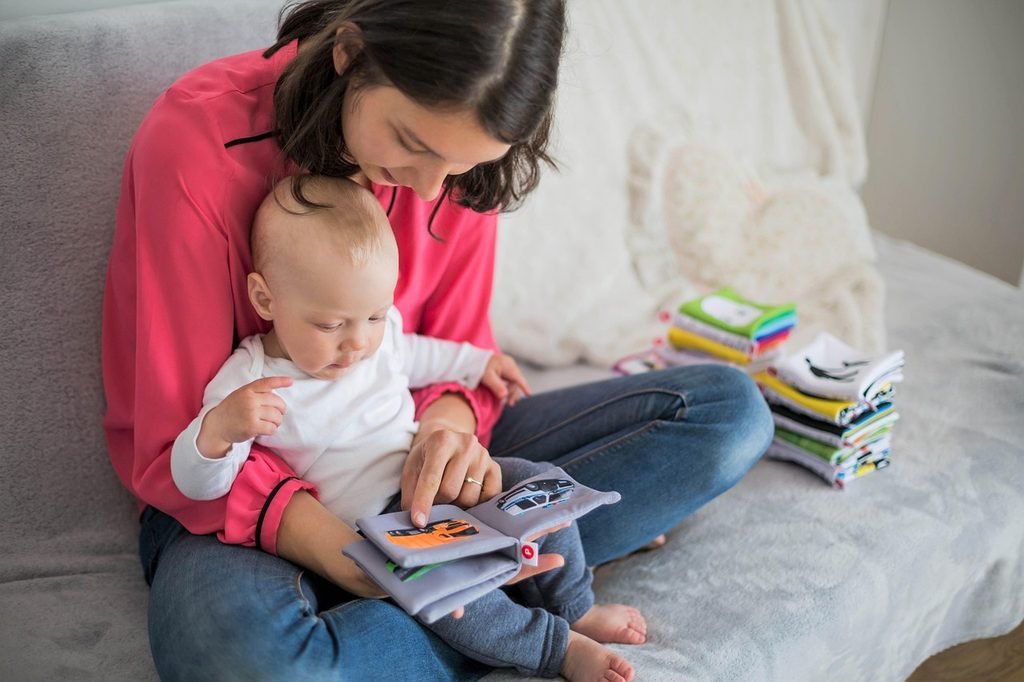
Reading is one of the strongest ways to encourage curiosity.
Parents can choose stories that introduce unfamiliar places, animals, cultures, occupations, historical periods, or scientific ideas. After reading, they can ask children what they found interesting.
Questions do not always need to test whether children remember the story. Instead, they can encourage imagination.
Parents might ask what a character could have done differently, what might happen after the story ends, or how the child would feel in a similar situation.
Nonfiction books can be especially useful because they allow children to explore subjects they already find interesting. A child who becomes fascinated by insects, space, oceans, machines, or dinosaurs can gradually explore more information about that topic.
Do Not Rush to Give Every Answer
Parents naturally want to help their children. However, answering every question immediately can sometimes reduce opportunities for independent thinking.
When a child asks a question, parents can sometimes respond with, “What do you think?”
This does not mean avoiding the answer. It simply gives the child an opportunity to form an idea first.
For example, if a child asks why a plant is leaning toward a window, parents can ask what they notice about the plant and where the light is coming from.
After hearing the child’s thoughts, the parent can explain how plants respond to light.
This process teaches children that questions can be investigated rather than simply answered by someone else.
Make Room for Safe Experiments
Children learn naturally through experimentation. Parents can provide simple and safe opportunities for children to test ideas.
For example, children can observe what happens when different objects are placed in water. They can compare which objects float and which sink. They can observe how ice changes as it warms or how sunlight affects shadows.
These activities do not need expensive equipment.
The purpose is not always to get the correct answer. Sometimes the most valuable part is making a prediction, observing what happens, and discussing why the result may have been different from what the child expected.
Parents should supervise activities when necessary and choose experiments that are appropriate for the child’s age.
Encourage Children to Ask Better Questions
Not every question needs to have a simple answer. Parents can gradually help children develop deeper questions.
If a child asks, “Why do birds fly?” a parent can discuss what the child already knows about birds. Then they can explore questions about wings, feathers, movement, and different types of birds.
Parents can also introduce questions such as “How do you know?” and “What makes you think that?”
These questions help children understand the difference between guessing and using evidence.
Over time, children may begin to ask more detailed questions on their own.
Accept That Curiosity Can Be Messy
Exploration is not always neat.
Children may open a box to see what is inside, take apart an old object, mix materials, or create something that makes a mess. Naturally, parents need to establish reasonable boundaries, especially when safety or valuable belongings are involved.
However, if every form of exploration is stopped because it might create a little mess, children may become hesitant to experiment.
Parents can create specific areas where children are allowed to explore freely. Old cardboard boxes, paper, safe household objects, building materials, and art supplies can provide many possibilities.
A little manageable mess can sometimes be part of meaningful learning.
Support Interests Even When They Change
Children’s interests can change quickly.
One month a child may be fascinated by animals. Later, they may become interested in drawing, vehicles, cooking, planets, sports, insects, or music.
Parents do not need to turn every interest into a long term commitment.
Instead, they can follow the child’s current enthusiasm. If a child suddenly becomes interested in insects, parents might read a book together, observe insects outside, or draw different types of insects.
Following children’s interests shows them that their questions and ideas matter.
It also helps parents discover what naturally motivates their children.
Encourage Children to Solve Small Problems
Everyday problems can become excellent opportunities for curiosity.
If a toy is difficult to assemble, parents do not always need to take over immediately. They can ask the child what seems to be wrong and what could be tried next.
If a child cannot decide how to organize their books, the parent can ask how they might group them.
The goal is not to make children struggle unnecessarily. Parents should provide support when needed, but they can leave room for children to think before offering a solution.
This builds both curiosity and problem solving skills.
Ask Open Ended Questions
Questions that have only one obvious answer do not always encourage much exploration.
Open ended questions give children more space to think.
Instead of asking, “Did you like the story?” parents can ask, “What was the most interesting part of the story to you?”
Instead of asking, “Was the weather hot today?” parents can ask, “What did you notice about the weather today?”
Instead of asking, “Is this your favorite color?” parents can ask, “What do you like about this color?”
These questions encourage children to explain their thoughts rather than simply answering yes or no.
Give Children Time to Think
Children sometimes need more time than adults expect.
When parents ask a question, they may be tempted to provide the answer if the child remains silent for a few seconds. Giving children additional time can help them organize their thoughts.
A pause does not necessarily mean that a child has nothing to say. They may be thinking carefully about the question.
Parents can remain patient and allow the child to respond at their own pace.
This can be especially helpful for children who are naturally quiet or cautious.
Show Your Own Curiosity
Children learn from watching their parents.
Parents can demonstrate curiosity by asking questions themselves. They can say things such as, “I have never thought about that before,” or “I wonder how this works.”
If something is unknown, parents do not have to pretend they know the answer.
Saying, “I do not know, but we can find out,” teaches children that adults are learners too.
This can make curiosity feel normal and valuable at every age.
Visit New Places When Possible
A change of environment can naturally encourage questions.
Parents can visit a library, museum, park, market, garden, historical site, farm, or another interesting location when practical.
The purpose does not have to be educational in a formal sense.
A new place gives children unfamiliar sights, sounds, objects, and experiences to explore.
Even a different route during a family walk can provide something new to notice.
Limit the Pressure to Be Perfect
Children who are afraid of making mistakes may become less willing to explore.
Curiosity requires a willingness to try, make predictions, discover unexpected results, and sometimes be wrong.
Parents can help by treating mistakes as part of learning.
If a child makes an incorrect prediction, parents can say, “That is interesting. We expected something different. What happened?”
This approach changes mistakes from something embarrassing into useful information.
Make Family Conversations More Curious
Family conversations can become an easy way to encourage thinking.
During meals or relaxed moments, parents can ask children about something they noticed during the day.
They might discuss an interesting question, a strange observation, or something they would like to understand.
Parents can also share their own observations.
These conversations show children that curiosity is not limited to schoolwork. It can be part of ordinary family life.
Encourage Children to Keep a Question Journal
Older children may enjoy keeping a small notebook where they write questions they want to explore.
The notebook does not need to be formal. A child might write questions about animals, space, technology, people, nature, history, or everyday experiences.
Parents can occasionally choose one question and explore it together.
This practice teaches children that questions are worth saving and investigating.
It can also help children recognize how many things they are capable of learning.
Protect Unstructured Time
Children need time when they are not constantly directed toward a specific activity.
Unstructured time can give them the freedom to invent games, explore objects, draw, build, observe, imagine, or simply think.
When every part of the day is planned, children may have fewer opportunities to discover their own interests.
Parents can provide a safe environment and basic materials while allowing children some freedom over how they spend their time.
Boredom can sometimes become the starting point for creativity and exploration.
Avoid Comparing a Child’s Curiosity With Others
Every child explores the world differently.
One child may ask dozens of questions, while another may spend a long time quietly observing before speaking.
Parents should avoid assuming that curiosity always looks like constant questioning.
Some children demonstrate curiosity through drawing, building, collecting, reading, watching, experimenting, or creating stories.
The important thing is to recognize and support the child’s individual way of exploring.
Build a Family Culture of Learning
The strongest way to encourage curiosity is to make learning a normal part of family life.
Parents can talk about new things, explore questions together, read regularly, visit interesting places, try simple activities, and show enthusiasm when children discover something.
There does not need to be a perfect educational plan.
Small moments matter.
A question during breakfast, an interesting insect in the garden, a strange cloud in the sky, a new recipe in the kitchen, or a broken toy can all become opportunities to explore.
When children grow up in an environment where questions are respected, mistakes are treated as learning opportunities, and exploration is encouraged, they are more likely to develop confidence in their ability to understand the world.
Final Thoughts
Encouraging curiosity does not require parents to have all the answers. In fact, some of the best learning experiences happen when parents and children explore questions together.
The most important thing is to create an environment where children feel comfortable wondering, asking, observing, experimenting, and discovering.
Parents can encourage curiosity by listening carefully to questions, asking open ended questions, allowing children to investigate safe ideas, supporting their interests, reading together, spending time outdoors, and giving them opportunities to solve everyday problems.